Français
 Italiano
 Español
 Русский язык

Mini Skid Steer Loader Hydraulic Flow and Pressure: Attachment Matching Guide
Getting the most out of your compact equipment lineup hinges on one critical detail: matching the hydraulic output of your machine to the requirements of your attachments. While our mini skid steer loaders remain the core of our offering, this hydraulic matching guide applies broadly across our growing family of compact loaders and compact earthmoving equipment, helping you avoid weak performance, sluggish operation, premature wear, and costly hydraulic damage.
Every attachment has a published hydraulic specification: a required working pressure and a minimum flow rate. Pressure delivers the pushing, digging and clamping force; flow controls speed. Too little pressure, and your auger will stall, your grapple cannot clamp firmly, and your trencher struggles to cut. Too little flow, and everything runs slow, killing jobsite productivity. Run an attachment beyond your machine’s hydraulic limits, and you risk blowing seals, overheating the hydraulic circuit, and shortening the service life of both loader and tool.
Core Terms to Know
Working Pressure (PSI / Bar): The maximum force the hydraulic system can supply. Most standard auxiliary circuits on compact loaders run around 2,500–3,000 PSI. High-pressure custom circuits are available for heavy-duty attachments.
Hydraulic Flow (GPM / LPM): The volume of oil delivered per minute. This directly governs cycle speed.
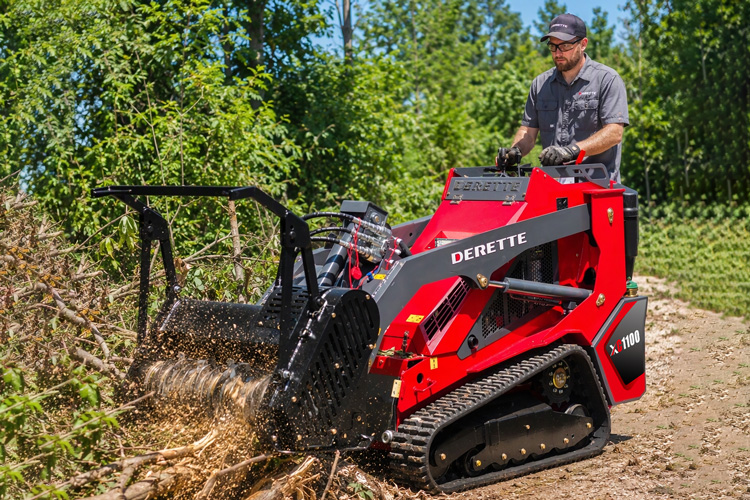
Standard Flow: Ideal for general-purpose attachments: 10–16 GPM covers grapples, four-way dozer blades, pallet forks, small sweepers and light stump grinders.
High-Flow Auxiliary: Typically 17–25+ GPM, built for speed-hungry tools: heavy augers, rock grinders, flail mowers, large snow blowers and hydraulic post drivers.
Continuous vs Burst Pressure: Attachments are rated for continuous operating pressure. Brief pressure spikes are normal, but sustained operation above the rated continuous rating will lead to early failure.
Auxiliary Hydraulic Circuit: The dedicated set of lines, valves and quick couplers that power attachments, separate from the machine’s lift and tilt circuit.
How to Match Your Loader to Attachments
Locate your machine’s official hydraulic specsCheck the operator manual or our specification sheet for auxiliary working pressure and rated flow at the standard operating RPM. Never rely only on idle flow; most hydraulic performance numbers are measured at working engine speed.
Check the attachment’s requirement firstPrioritise the attachment’s minimum required flow and continuous pressure. If your machine meets or exceeds both numbers, the pairing is safe. If the attachment calls for higher flow than your loader delivers, it will still run, but at reduced speed. If it requires higher pressure, skip the pairing — forced operation will damage components.
Factor in hose, couplers and line lengthRestriction from undersized quick couplers, kinked hoses or overly long hydraulic lines can drop pressure and reduce usable flow, even if the pump itself is powerful enough. We recommend using matched, high-quality couplers and hoses rated above your system’s maximum pressure.
Adjust operating habits for mismatched setupsIf you run a high-demand attachment on a standard-flow machine, avoid full-throttle continuous heavy use. Allow cooling breaks to keep hydraulic oil temperature stable, and inspect hoses and seals more frequently.
Derette Hydraulic Design Advantage
Our compact loaders are engineered with generous auxiliary hydraulic reserves to support a broad selection of aftermarket and original attachments. Every unit comes with clearly marked quick-connect ports, well-protected hydraulic lines and a calibrated relief valve to guard against overload. Whether you are equipping a mini skid steer for landscaping, site prep, snow removal or farm work, our sales and technical team can advise you on which attachments will deliver reliable performance without overtaxing your machine.
If you plan to expand your fleet beyond mini skid steers into other compact work machines, the same matching rules apply. When enquiring for a new machine or a new attachment, share the target hydraulic requirements with our team, and we will help you build a compatible setup.
Common Mistakes to Avoid
Assuming “if the couplers fit, it will work”: Quick coupler compatibility is mechanical only and tells you nothing about flow or pressure.
Overlooking hydraulic oil temperature: High-demand attachments push heat into the system; insufficient flow often leads to overheating.
Ignoring relief valve settings: Do not simply crank up the relief pressure to match an attachment rating. This voids relevant warranties and creates safety risks.
Mixing high-flow attachments with small, underpowered pumps: The attachment will underperform, and wear will accelerate on pump, motor and seals.
Get Personalised Matching Support
If you are unsure whether a specific auger, grapple, mower or snow attachment will pair well with your Derette compact loader, reach out to our team. Send over the attachment’s hydraulic specification sheet or model number, and we will confirm compatibility, recommend upgrades such as a high-flow auxiliary package where available, and share operating tips to extend the service life of your whole attachment toolkit.
Whether you run a small landscaping business, rental yard or farm operation, correct hydraulic matching turns your compact equipment into a versatile, dependable asset on every jobsite.