Français
 Italiano
 Español
 Русский язык

Mini Skid Steer Loader Hydraulic Grapple Brush Clearing for Property Cleanup
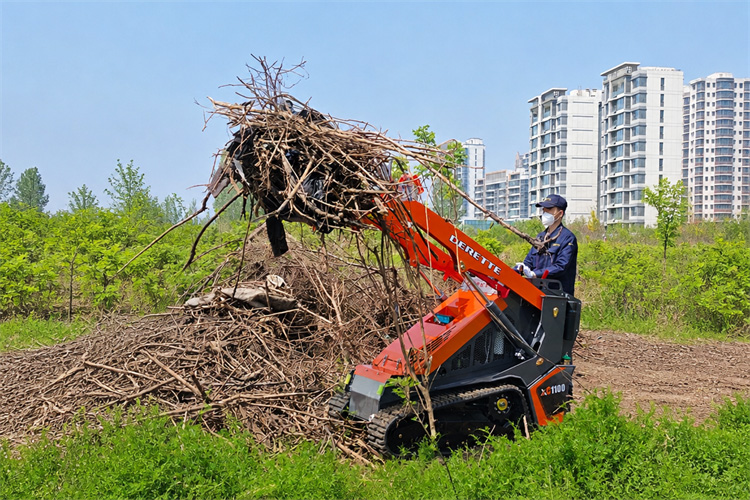
For brush clearing and property cleanup, the mini skid steer loader provides the mobility and lifting platform, while the hydraulic grapple helps the operator hold, gather, reposition, and organize suitable loose material.
The loader remains the main subject of the work package. Its size, travel system, operator position, visibility, hydraulic configuration, and ability to move through the property all influence how the grapple can be used.
A Derette mini skid steer loader with a compatible hydraulic grapple may be considered for brush, storm debris, logs, branches, and other organic material handling applications. The actual material limits, hydraulic requirements, and configuration must be confirmed with the supplier before purchase.
1. Which Property-Cleanup Problems Suit a Loader and Grapple?
A hydraulic grapple can be useful when the site contains loose or irregular material that needs to be gathered and relocated. Typical planning situations may include:
Brush clearing around property boundaries
Branch and vegetation cleanup after a storm
Removal of loose organic material
Handling suitable logs or timber sections
Clearing material from access routes
Organizing debris into a designated staging area
Preparing a work zone for later landscaping or construction
The application should be described by material type and site condition rather than by a general phrase such as “heavy cleanup.” Brush, branches, logs, soil, rocks, scrap, and mixed waste may require different equipment decisions.
The mini skid steer loader provides the ability to move around the property and approach material from different directions. The grapple supports the handling step, but it does not replace the need to plan the route, operating area, material boundary, and staging location.
2. How Does the Loader Work with the Hydraulic Grapple?
The work process depends on coordination between the loader and the grapple.
Step one: Review the property
Identify the material to be handled, access routes, slopes, fences, buildings, trees, utility areas, and the intended staging location. Remove or isolate hazards that could interfere with the loader’s movement.
Step two: Approach the material
The operator positions the mini skid steer loader so the grapple can reach the selected material while maintaining a clear view of the work area. The loader should be aligned with the material instead of approaching blindly from an unsuitable angle.
Step three: Clamp suitable material
The hydraulic grapple is used to hold material within the confirmed application limits. The operator should avoid collecting items that exceed the supplier’s stated operating guidance or that cannot be controlled securely.
Step four: Move to the staging area
The loader travels along a planned route to a designated location. The route should account for surface conditions, slope, people, vehicles, property boundaries, and overhead or side obstructions.
Step five: Release and reposition
The operator releases the material in a controlled area, checks the next route, and repositions the loader for the next collection cycle.
This workflow keeps the mini skid steer loader at the center of the application. The grapple is one working component within a broader mobility and material-handling process.
3. What Material Boundaries Should Be Defined Before Work?
Brush clearing and property cleanup often involve mixed material. Buyers should define what the loader-and-grapple package is expected to handle before selecting a configuration.
Discuss:
Small brush and branches
Loose organic material
Storm debris
Logs or timber sections
Root balls or attached soil
Rocks and dense objects
Scrap or construction waste
Mixed piles containing unknown material
Wet, tangled, or unstable loads
The supplier should confirm which materials are appropriate for the proposed grapple and loader. A grapple intended for brush handling should not automatically be treated as suitable for every heavy, sharp, dense, or irregular object.
The operator should also consider whether the material can shift, fall, extend beyond the loader’s working envelope, or affect visibility during travel. Material should be handled only within the operating guidance for the confirmed configuration.
4. How Should Buyers Check the Worksite and Hydraulic Configuration?
A complete inquiry should cover both the loader and the hydraulic grapple.
Provide:
Type of property and cleanup area
Access route and available working space
Ground and surface conditions
Slopes, ramps, and restricted sections
Material types and approximate form
Desired staging or disposal area
Frequency of repositioning
Operator visibility concerns
Destination market
Required documents and technical information
Ask the supplier to confirm:
Hydraulic grapple compatibility
Auxiliary hydraulic requirements
Attachment interface
Connection and installation information
Operating instructions
Applicable material-handling limits
Loader configuration and transport information
Whether the selected machine-and-grapple package requires additional confirmation
Do not choose a grapple by jaw appearance alone. The hydraulic system, interface, loader operating position, route conditions, and material type should be reviewed as one package.
For a property-cleanup team, the most useful equipment question is not simply “Which grapple is strongest?” It is “Which loader and grapple configuration matches our material, access route, operating space, and handling process?”
Frequently Asked Questions
What can a mini skid steer loader with a hydraulic grapple be used for?
A suitable configuration may be considered for brush clearing, storm debris, branches, logs, organic material, and property cleanup. The supplier should confirm whether the proposed material is appropriate for the exact loader and grapple combination.
Is the hydraulic grapple the main machine?
No. The mini skid steer loader is the main mobile platform. It provides the travel system, operator position, hydraulic connection, and working movement, while the grapple supports material holding and handling.
Can the grapple handle every type of property debris?
No assumption should be made. Buyers should identify the material types in advance and confirm the grapple’s application limits with the supplier, especially when the pile contains rocks, scrap, dense objects, or mixed waste.
What should I check before using a grapple for brush clearing?
Check access, ground conditions, route clearance, material type, visibility, staging space, hydraulic compatibility, attachment interface, and the operating instructions for the complete configuration.
Can this setup be used for storm debris?
It may be considered for suitable storm debris, branches, and organic material after the site and material conditions have been assessed. Sharp, unstable, contaminated, or mixed debris requires additional evaluation.
What information should a landscaping contractor send to Derette?
Send photographs or a description of the property, access route, surface conditions, material types, staging area, expected operating space, and the type of loader-and-grapple work package required.
Does a hydraulic grapple require specific loader information?
Yes. Buyers should confirm the loader’s hydraulic configuration, attachment interface, operating arrangement, and application limits before selecting the grapple.